Édouard Cortès was one of France’s most celebrated painters of Parisian street scenes, renowned for his atmospheric depictions of the French capital throughout the changing seasons and times of day. Born in Lagny-sur-Marne in 1882 into a family of artists, Cortès inherited his artistic talent from his father, the Spanish-born painter Antonio Cortès. He received his early artistic training under his father’s guidance before developing his own distinctive style.
Cortès made his debut at the Salon des Artistes Français in 1899, where his work was awarded a bronze medal at the age of just sixteen. This early recognition marked the beginning of a highly successful career that spanned more than six decades.
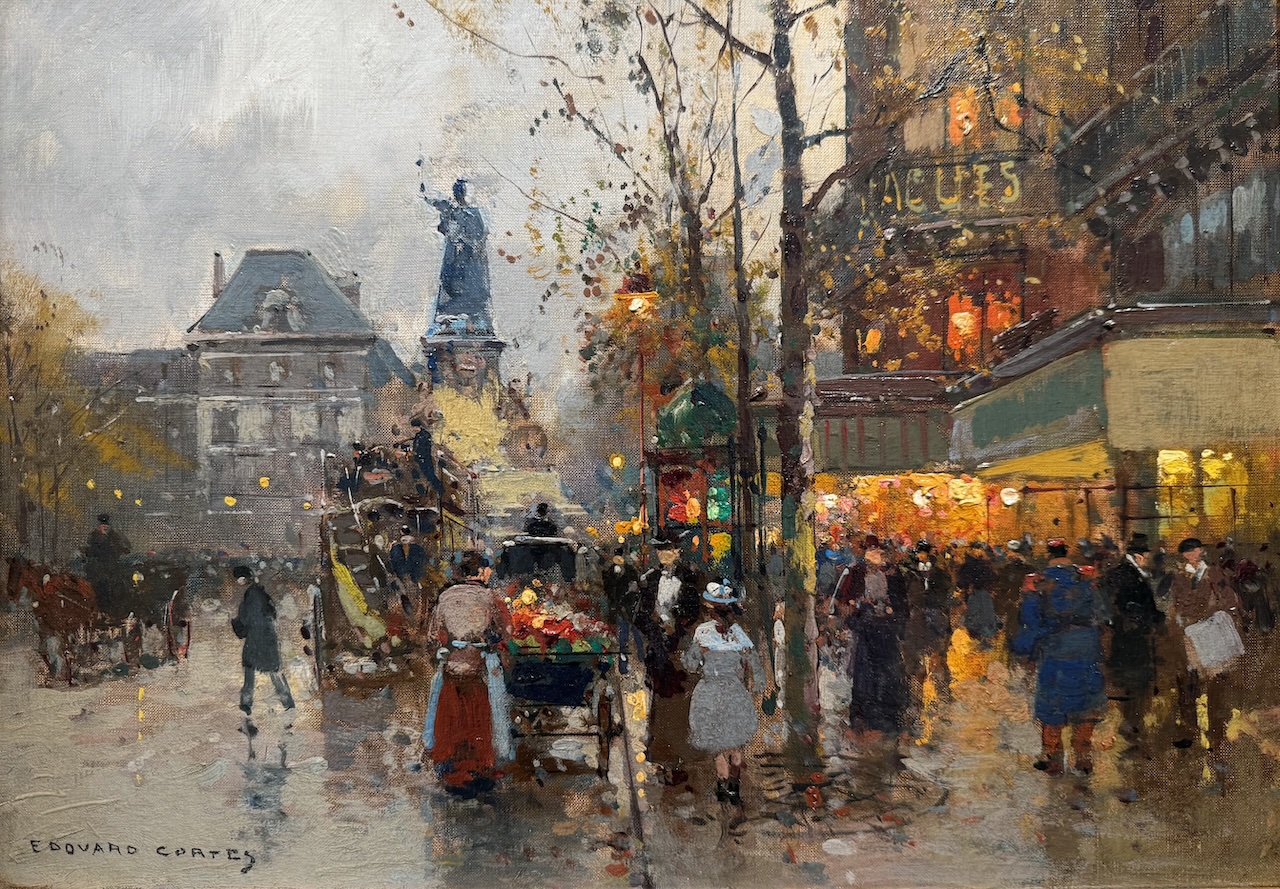
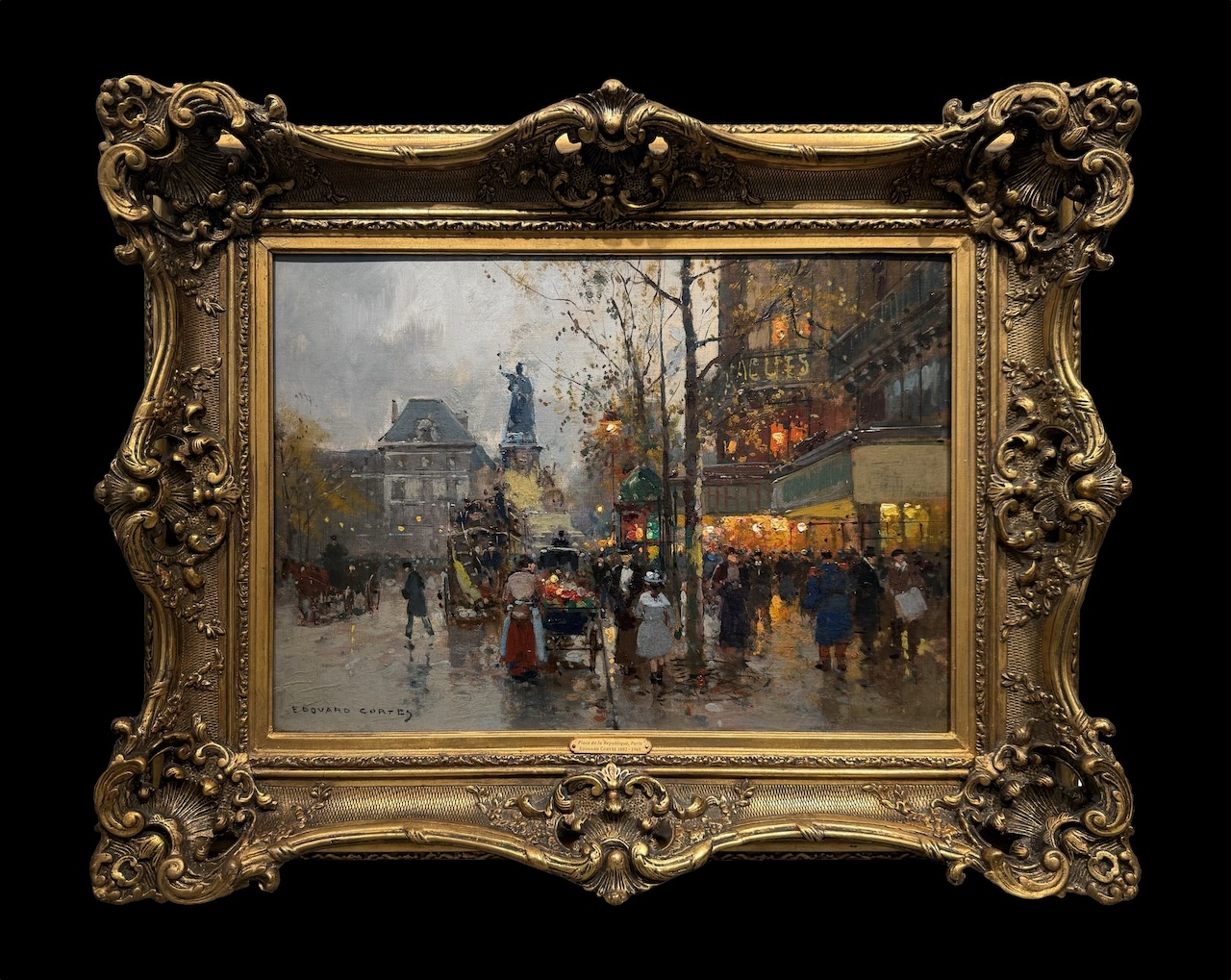
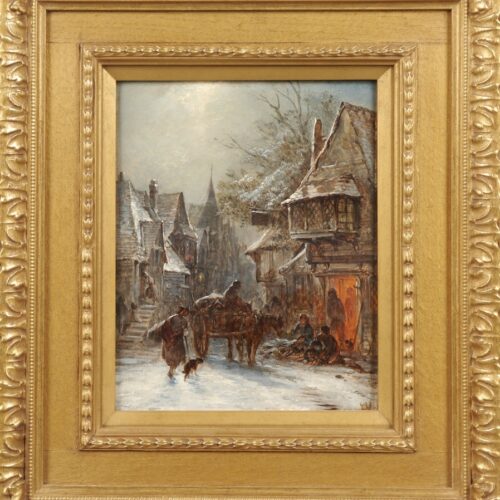
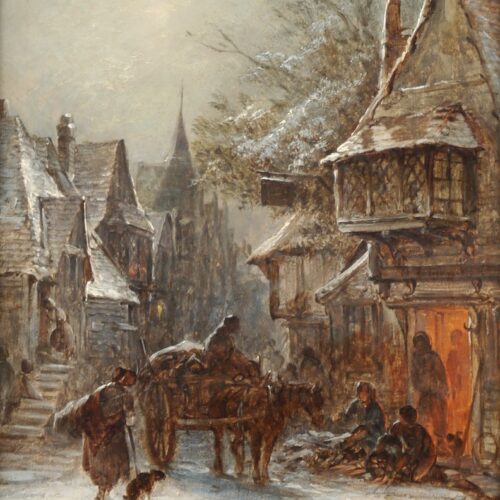
Working in the tradition of the Post-Impressionists, Cortès became best known for his evocative views of Paris. His paintings capture iconic landmarks such as the Opéra Garnier, Place de la Madeleine, Boulevard de la Madeleine, Place de la République and the Champs-Élysées, often animated by elegant figures, horse-drawn carriages, early motorcars and bustling cafés. Whether illuminated by the warm glow of a summer afternoon, the reflections of rain-soaked streets or the sparkle of freshly fallen snow, his works celebrate the enduring beauty and romance of Paris.
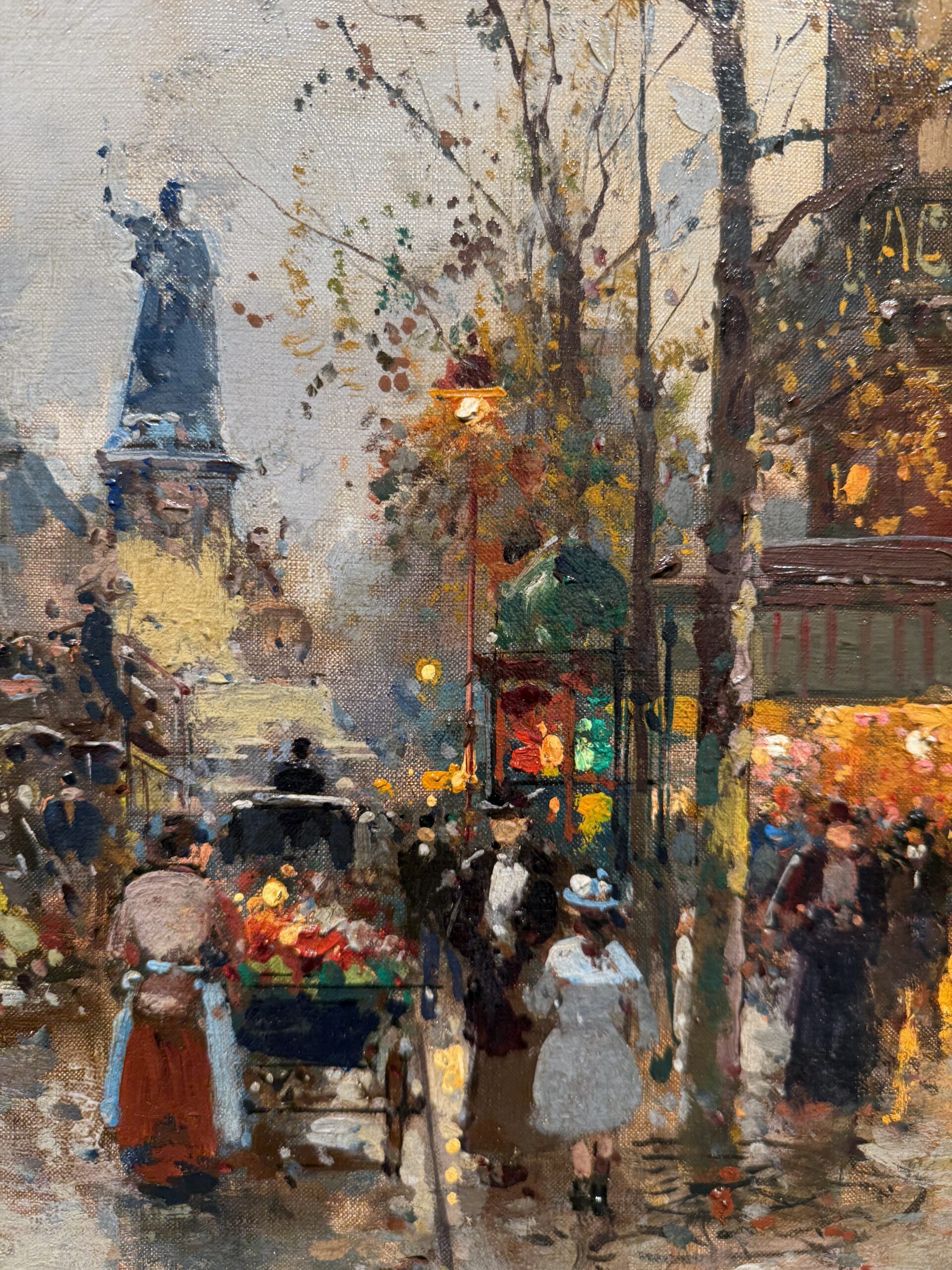
Cortès possessed an exceptional ability to capture light and atmosphere. His masterful use of colour and expressive brushwork transforms familiar city scenes into timeless impressions of Parisian life. Rather than focusing on monumental architecture alone, he sought to convey the mood and rhythm of the city, inviting viewers into its lively boulevards and intimate streets.